
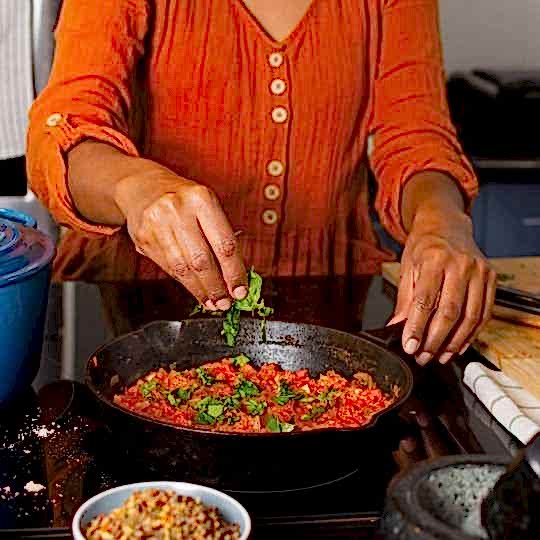
Cooking with Cypriot Herbs: Nourishment, Tradition & Everyday Wellness
In Cypriot kitchens, herbs have never been just a garnish. They are an essential part of how we cook, how we digest, and how we care for our bodies. For centuries, local herbs like rosemary, thyme, basil, peppermint and turmeric have been used not only to season food, but to support digestion, enhance nutrient absorption, and bring balance to everyday meals.
Adding herbs to meat, vegetables, salads and grains helps stimulate digestive enzymes, reduce bloating, and support gut health. Many herbs are rich in antioxidants, anti-inflammatory compounds, and essential minerals, making them powerful allies for overall wellbeing. This is why traditional Cypriot food is both deeply flavourful and deeply nourishing.
Herbs have been used in Cypriot cooking for centuries, passed down through generations as part of everyday life. They are not reserved for special occasions, but woven naturally into daily meals — supporting health through food in a simple, intuitive way.
Below are some easy, wholesome recipes inspired by Mediterranean wisdom, using Cypriot herbs to elevate everyday cooking.
Homemade Chicken Souvlaki with Flavours of Cyprus
A true Cypriot classic, souvlaki is all about good seasoning and quality herbs.
Marinate chicken pieces with olive oil, lemon juice, garlic and Flavours of Cyprus seasoning
Grill or pan-sear until golden and juicy. Serve wrapped in warm pita with fresh tomato, cucumber and onion, and finish with tahini or tzatziki. Add a sprinkle of dried peppermint for freshness and digestive support.
Peppermint has traditionally been used to ease digestion, reduce heaviness after meals, and refresh the palate, making it ideal for grilled meats.
Lemon & Basil Chicken Linguine
This light yet satisfying pasta combines citrus, herbs and comfort.
Sauté chicken breast with olive oil, garlic and lemon zest. Toss with cooked linguine, a splash of pasta water, lemon juice and generous amounts of basil.
Basil supports digestion, helps reduce inflammation, and brings a fresh aroma that lifts the entire dish. Finish with black pepper and a drizzle of olive oil.
Breakfast Overnight Oats with Rosehip Powder
Herbs and botanicals don’t belong only in savoury dishes — they can be powerful additions to breakfast too.
Soak oats overnight in plant milk or yogurt. In the morning, top with strawberries, banana, goji berries and a teaspoon of rosehip powder.
Rosehip is naturally rich in vitamin C and antioxidants. It has traditionally been used to support joint health and is especially valued for helping ease arthritis and rheumatic pain by reducing inflammation and supporting connective tissue health.
This is a delicious and nutritious way to start the day with both flavour and function.
Lentil Soup with Turmeric & Masala
Lentil soup is a staple in many Cypriot homes, especially during cooler months. Cook lentils with onion, garlic, carrot and celery.
Add turmeric powder, masala spices, cumin and black pepper.
Turmeric is known for its powerful anti-inflammatory properties and digestive benefits. Combined with warming spices, it supports metabolism, gut health and immune function.
Finish with lemon juice and olive oil before serving.
Lemon & Thyme Pan-Seared Chicken with Brown Rice
This aromatic dish is simple and easy to make.
Season chicken with olive oil, lemon juice, garlic and thyme.
Pan-sear until golden and serve with brown rice and seasonal vegetables.
Thyme has traditionally been used to support digestion and respiratory health, making it an excellent herb for everyday meals.
Sea Bass or Sea Bream with Lemon & Rosemary Potatoes
Fresh fish pairs beautifully with woody Mediterranean herbs.
Bake sea bass or sea bream with olive oil, lemon slices and rosemary.
Serve with oven-roasted potatoes seasoned with rosemary and sea salt. Rosemary enhances circulation, supports digestion of fats, and adds depth and warmth to both fish and vegetables.
Frequently Asked Questions About Cypriot Food & Herbs
What herbs are used in Cypriot cooking?
Cypriot cuisine uses a wide variety of aromatic Mediterranean herbs, many of which grow naturally on the island. Commonly used herbs include oregano, thyme, rosemary, basil, mint (peppermint), bay leaf, parsley, coriander seed, fennel seed, sage and marjoram.
These herbs are used fresh or dried to season meats, fish, vegetables, legumes and salads. Beyond flavour, they are traditionally valued for their digestive, anti-inflammatory and immune-supporting properties, which is why they are deeply embedded in everyday cooking.
What is Cyprus famous for in food?
Cyprus is famous for its Mediterranean diet, which focuses on fresh vegetables, olive oil, herbs, legumes, grains, fish and moderate amounts of meat. Well-known Cypriot foods include halloumi cheese, souvlaki, sheftalia, kleftiko (slow-cooked lamb), louvi (black-eyed peas), lentil and chickpea dishes, and a wide variety of meze.
Cypriot food is known for being simple, seasonal and nourishing, with herbs enhancing natural flavours rather than overpowering them.
What is the national dish of Cyprus?
There is no single official national dish, but meze is widely considered the heart of Cypriot cuisine. Meze is a shared dining experience made up of many small dishes, including grilled meats or fish, salads, dips, vegetables, legumes and bread, all seasoned with herbs and olive oil.
Among individual dishes, souvlaki, sheftalia and kleftiko are often referred to as national favourites, reflecting Cyprus’s strong tradition of grilling, slow cooking and herb-based seasoning.
What are the do’s and don’ts in Cyprus?
- Do enjoy food slowly and socially, as meals are a time for connection.
- Do use herbs generously in home cooking, as is traditional.
- Do share dishes when eating with others and respect seasonal, local ingredients.
- Don’t rush meals or eat on the go when possible.
- Don’t overuse heavy sauces that mask natural flavours.
- Don’t waste food — Cypriot culture places great value on appreciation for what is served.
In Cyprus, food is more than nourishment. It is culture, memory and hospitality — and cooking with herbs is one of the most authentic ways to experience this connection.