
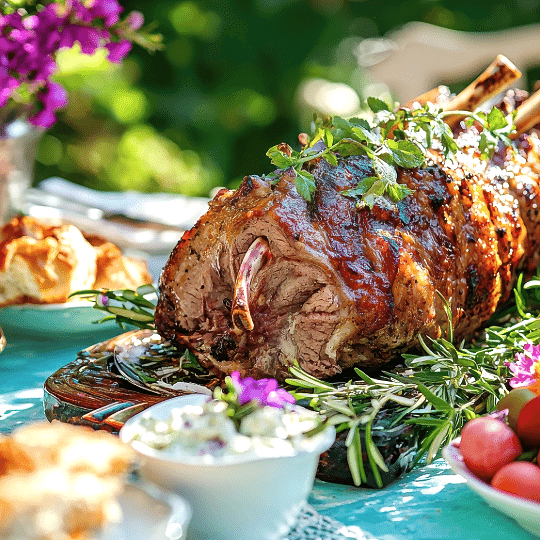
A Cypriot Easter Table: Tradition, Herbs & Seasonal Nourishment
Easter in Cyprus is deeply rooted in food, family and ritual. It is a time when kitchens come alive with slow cooking, fragrant herbs, shared tables and recipes passed down through generations. Herbs play a central role in the Easter table — not only for flavour and aroma, but for digestion, balance and nourishment after the long Lenten fast.
From oven-baked lamb infused with rosemary and bay leaf, to golden potatoes and naturally dyed red eggs, Cypriot Easter cooking is a celebration of simplicity, seasonality and respect for nature.
Below are traditional Easter dishes inspired by Cypriot cuisine, with herbs taking centre stage.
Traditional Cypriot Easter Lamb with Herbs
Lamb is the heart of the Cypriot Easter table, traditionally cooked slowly so it becomes tender, aromatic and deeply comforting.
The lamb is seasoned simply with olive oil, lemon juice, garlic, rosemary, thyme and bay leaf, then baked low and slow in the oven. These herbs help break down proteins, support digestion and balance the richness of the meat.
Rosemary has long been used in Cyprus to aid digestion and circulation, while thyme supports the respiratory system and adds warmth and depth. Bay leaf brings grounding, aromatic notes and helps make heavy meals easier to digest.
Easter Potatoes with Rosemary & Bay Leaf
No Cypriot Easter meal is complete without potatoes infused with herbs.
Potatoes are cut into wedges and roasted with olive oil, lemon juice, rosemary and bay leaf until crisp on the outside and soft inside. As they bake, the herbs release their oils, filling the kitchen with a familiar Easter aroma.
Using good-quality rosemary makes a noticeable difference in both flavour and digestion support:
This dish pairs perfectly with lamb and reflects the Cypriot philosophy of letting herbs elevate simple ingredients rather than overpower them.
Other Traditional Cypriot Easter Dishes
Alongside lamb and potatoes, the Easter table often includes:
• Flaounes – traditional Easter cheese pies flavoured with herbs and spices
• Fresh village bread and olive oil
• Seasonal salads with lemon and herbs such as basil and mint
• Hard-boiled red eggs for cracking at the table (tsougrisma)
Natural Red Easter Egg Dye with Onion Skins
A planet-friendly way to keep tradition alive
In Cyprus, red eggs symbolise life, renewal and resurrection. Traditionally, eggs were dyed using natural materials — a practice that is both meaningful and environmentally friendly.
How to dye Easter eggs naturally with onion skins
You will need:
• Brown or red onion skins (the more, the deeper the colour)
• Water
• White vinegar
• White or light-coloured eggs
Method:
Place onion skins in a pot and cover with water. Bring to a boil and simmer for 30–40 minutes until the water turns a deep reddish-brown. Strain out the skins if you prefer a smoother colour, or leave them in for a marbled effect.
Add one to two tablespoons of vinegar to help the colour set. Gently lower the eggs into the dye and simmer for 10–12 minutes. Leave the eggs in the liquid longer if you want a deeper red.
Remove, cool and lightly polish with olive oil for a natural shine.
This method avoids synthetic dyes, honours tradition, and reconnects us with older, more mindful ways of celebrating Easter.
Easter, Herbs & Meaningful Cooking
Cypriot Easter food should not be about excess, but about intention. Herbs are used thoughtfully, meals are prepared with care, and recipes carry memory and meaning.
Cooking with herbs during Easter helps the body digest rich foods, especially when we do tend to overeat a little. We hope to have inspired you to use more cypriot herbs in your cooking this easter!
Frequently Asked Questions About Cooking with Herbs in Cyprus
What herbs are used in Cyprus cooking?
Cypriot cooking traditionally uses a wide range of Mediterranean herbs, many of which grow naturally on the island. Common herbs include rosemary, thyme, oregano, basil, mint (peppermint), bay leaf, parsley, coriander seed, fennel seed and sage. These herbs are used to season meat, fish, vegetables, legumes and salads, adding flavour while also supporting digestion and overall wellbeing.
How many minutes should herbs be cooked?
The cooking time for herbs depends on whether they are fresh or dried and on the type of herb.
Woody herbs such as rosemary, thyme and bay leaf benefit from longer cooking times and can be added at the beginning of cooking to slowly release their aroma and oils. Softer herbs like basil and mint are best added towards the end of cooking or just before serving, as long heat exposure can reduce their flavour and beneficial properties.
As a general rule:
• Woody herbs: cook for 20–60 minutes
• Soft herbs: add in the last 1–5 minutes or use fresh as a garnish
How do you cook with herbs?
Cooking with herbs is about balance and intention. Herbs can be used to marinate meat, flavour sauces, season vegetables, enrich soups and stews, or finish a dish just before serving.
In traditional Cypriot cooking, herbs are often combined with olive oil, lemon and garlic. This helps extract their aromatic compounds while making dishes easier to digest. Using herbs regularly, rather than occasionally, is key to both flavour and wellness.
How do you use mixed herbs in cooking?
Mixed herbs are a convenient way to add depth and complexity to dishes. They work especially well in marinades, roasted vegetables, soups, stews and oven-baked dishes.
When using mixed herbs, add them early in slow-cooked meals so the flavours have time to blend. For lighter dishes such as salads or pasta, use mixed herbs sparingly or sprinkle them in near the end of cooking. A small amount goes a long way, especially with dried herb blends.